DIY Rosemary Shampoo Recipe

I started noticing more hair in my brush than usual about two years ago. Nothing dramatic, but enough to make me pause every morning and think something has to change.
I’d already switched most of our household products over to cleaner alternatives, my homemade cleaning sprays, DIY body butter, that kind of thing, so it felt only natural to look at what I was putting on my hair every single day.
When I started digging into herbal hair care, rosemary kept coming up again and again. Traditionally used for centuries to support scalp health and stimulate circulation, it has deep roots in European and Mediterranean herbal traditions.
I knew I had to share what I put together once I finally landed on a formula that actually worked! It took A LOT of testing and LOTS of failures haha.
This DIY rosemary shampoo is not your basic castile-soap-in-a-bottle situation (though I love that for other things!).
This is a properly formulated, salon-quality natural shampoo DIY that lathers, conditions, and leaves hair feeling genuinely clean and soft.
My daughter tried it first and immediately asked if she could use it every wash day, that told me everything I needed to know 🙂 My husband tried and said it smelled and worked just like regular shampoo.
Whether you’re looking for a DIY shampoo for hair growth, a gentler cleanser for damaged ends, or just want to know exactly what’s going into your hair care routine, this homemade shampoo recipe is for you 🙂
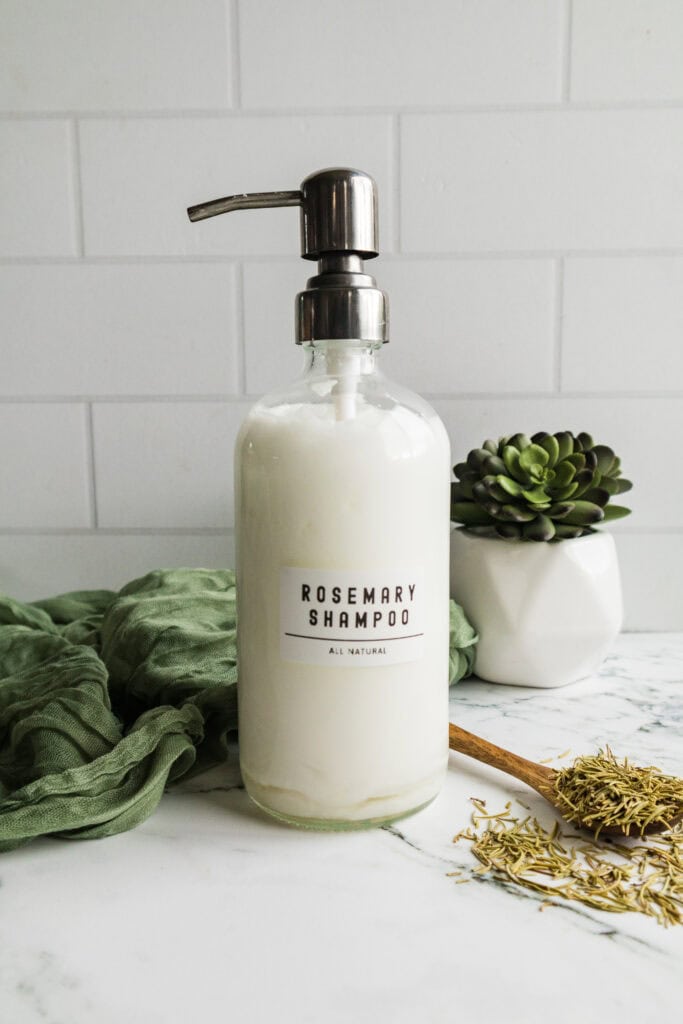
Benefits
Rosemary essential oil is the real star here. It’s long been used in traditional herbalism to support scalp circulation, and many people reach for a rosemary shampoo recipe specifically because they want to encourage thicker, healthier-looking hair over time.
It also has natural cleansing and refreshing properties; your scalp will feel great after a wash, which is why I use rosemary in pretty much all my hair care products, from my DIY scalp scrub to hair growth serum.
Vegetable glycerin is a humectant, meaning it draws moisture from the air into the hair shaft. It’s one of my favorite ingredients for dry or frizzy hair (my favorite benefit!!).
Panthenol (provitamin B5) penetrates the hair shaft and helps improve elasticity and moisture retention. It’s what gives this DIY herbal shampoo that silky, conditioned feel after rinsing.
Xanthan gum is our thickener, it gives the shampoo that familiar gel-like consistency instead of a watery liquid.
Decyl glucoside, cocamidopropyl betaine, and coco glucoside are all plant-derived surfactants that cleanse gently without stripping. Together they create a beautiful, mild lather. This is what is missing from other homemade shampoos that just use castile soap.
BTMS-50 and cetyl alcohol form the conditioning backbone. These are the ingredients that make this feel like a conditioning shampoo, not just a cleanser. Great for tangly hair (little hands especially!).
Pin This Post For Later:
Some of these links are affiliate links meaning if you purchase from these links, I will earn a commission at no extra cost to you. Everything I share is my own opinions and things I personally use and love. You can learn more by reviewing my disclosure. As an Amazon affiliate, I earn from qualifying purchases.
DIY Rosemary Shampoo Recipe
Makes approximately 8 ounces
Ingredients
Water Phase
- 1/2 cup distilled water
- 1 tablespoon + 1 teaspoon vegetable glycerin
- 3/4 teaspoon panthenol
- 1/4 teaspoon xanthan gum
Surfactant Phase
- 2 tablespoons + 1 teaspoon decyl glucoside
- 1 tablespoon + 2 teaspoons cocamidopropyl betaine
- 2 teaspoons coco glucoside
Conditioning Phase
- 1 tablespoon BTMS-50
- 2 teaspoons cetyl alcohol
Cool Down Phase
- Preservative of choice (follow directions on yours for correct amount, I used Geogard ECT)
- 58 drops rosemary essential oil (about 1/3 teaspoon)

Instructions
In a heat-safe container, combine the vegetable glycerin and xanthan gum. Once combined, add in the distilled water and panthenol.
In a separate heat-safe container, combine the BTMS-50 and cetyl alcohol.
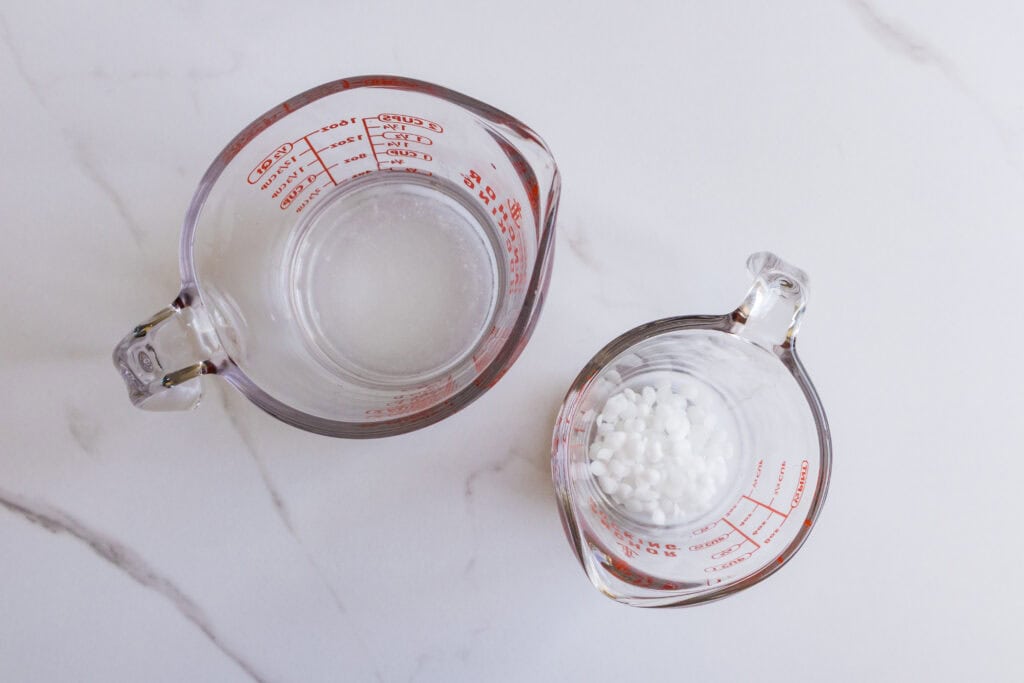
Heat both phases using a double boiler until the conditioning phase is fully melted and both phases are around the same temperature (about 160-170°F).
Pour the conditioning phase into the water phase and mix well until smooth. You can use short bursts of an immersion blender in this step.
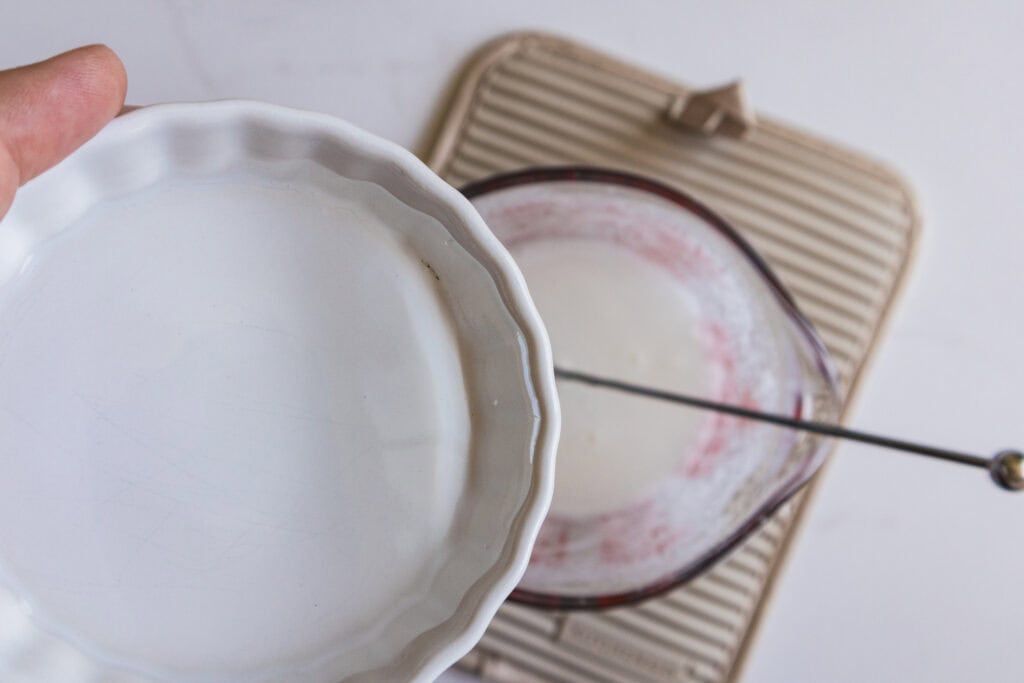
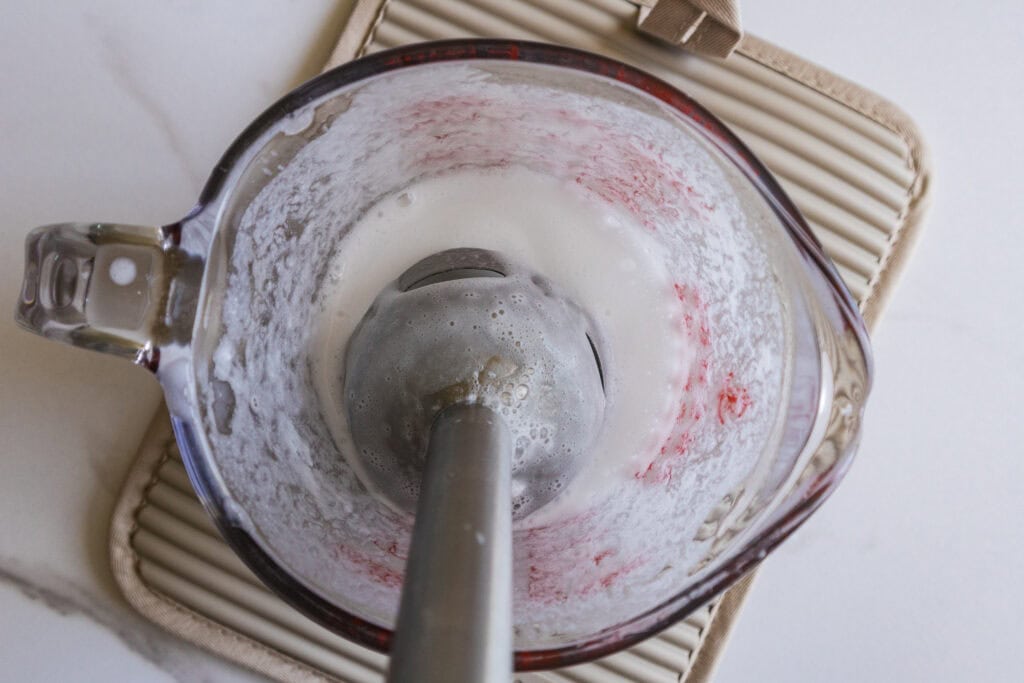
Gently stir in the decyl glucoside, cocamidopropyl betaine, and coco glucoside, mixing slowly to avoid excess bubbles. Do NOT use the immersion blender here, only a stick and go slowly.
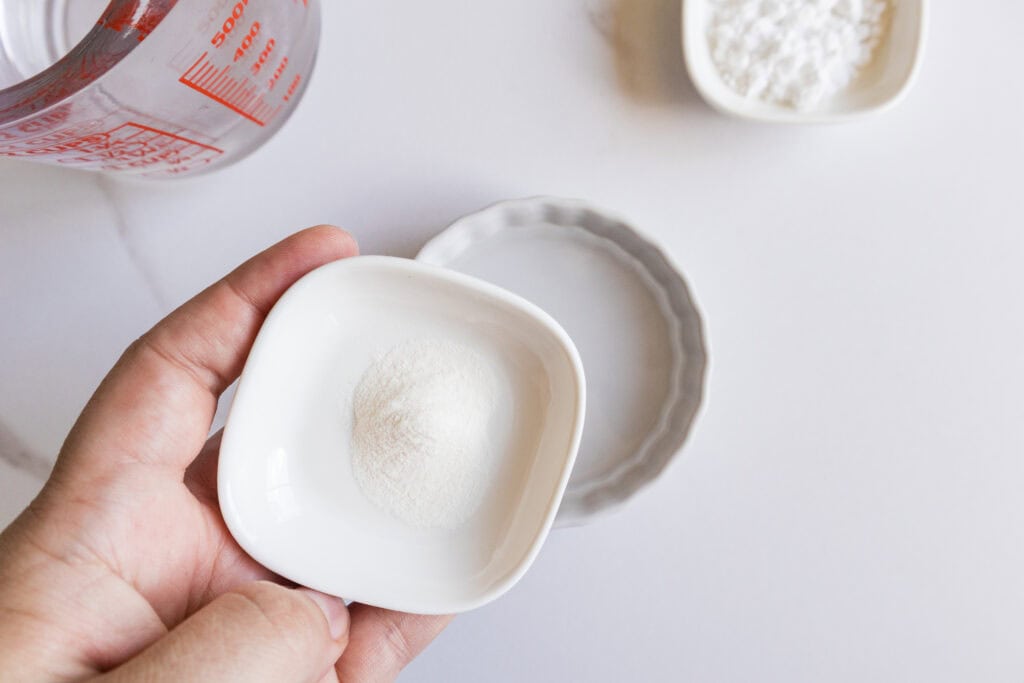
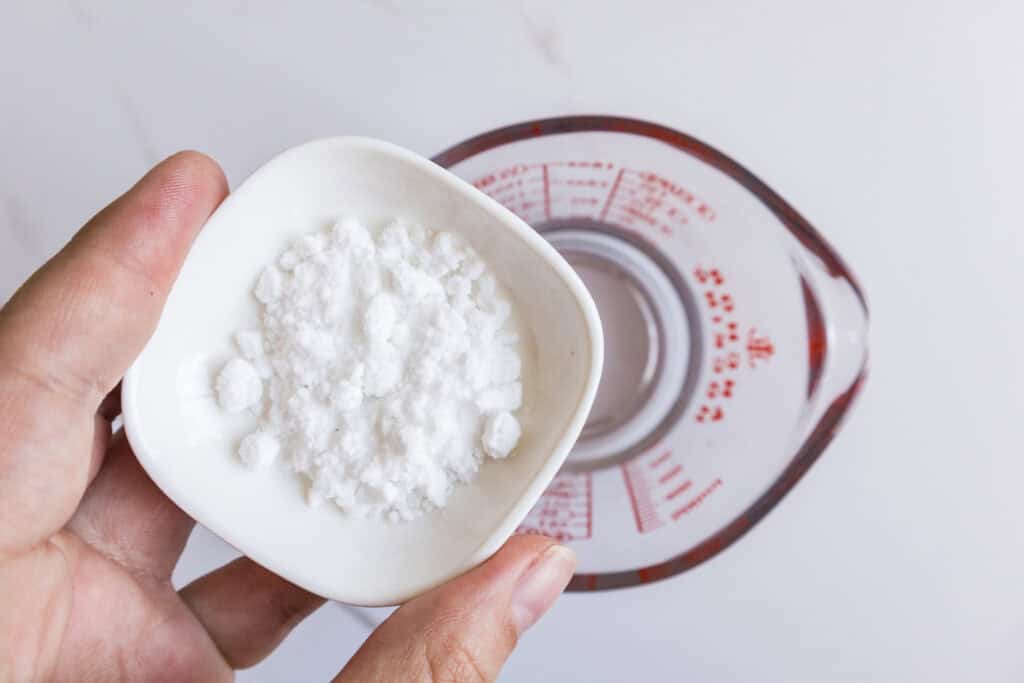
Allow the mixture to cool below 100°F.
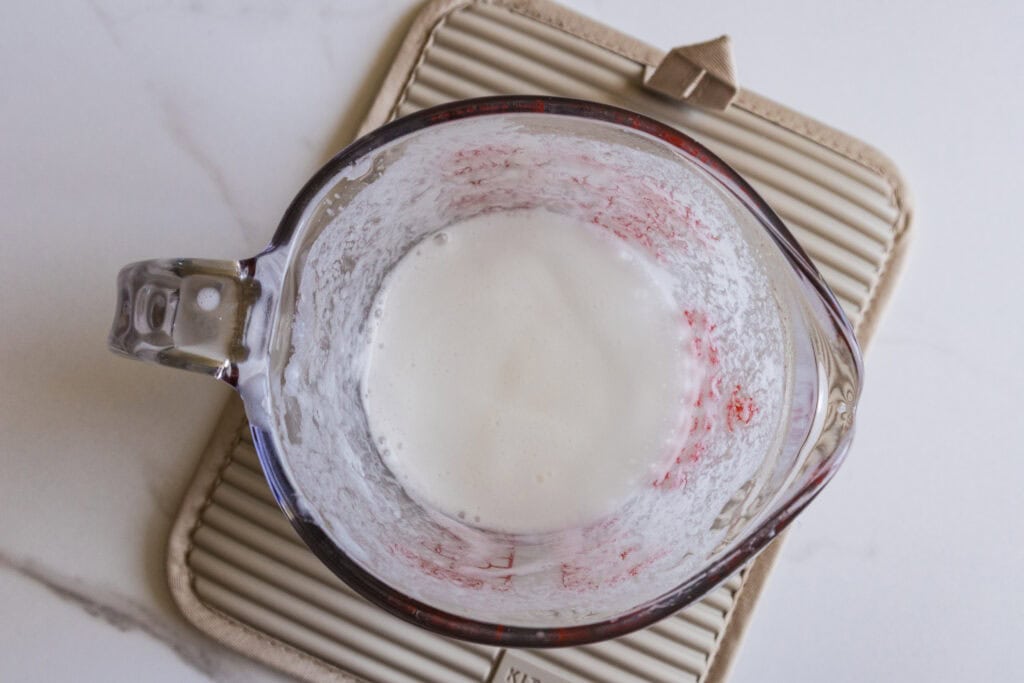
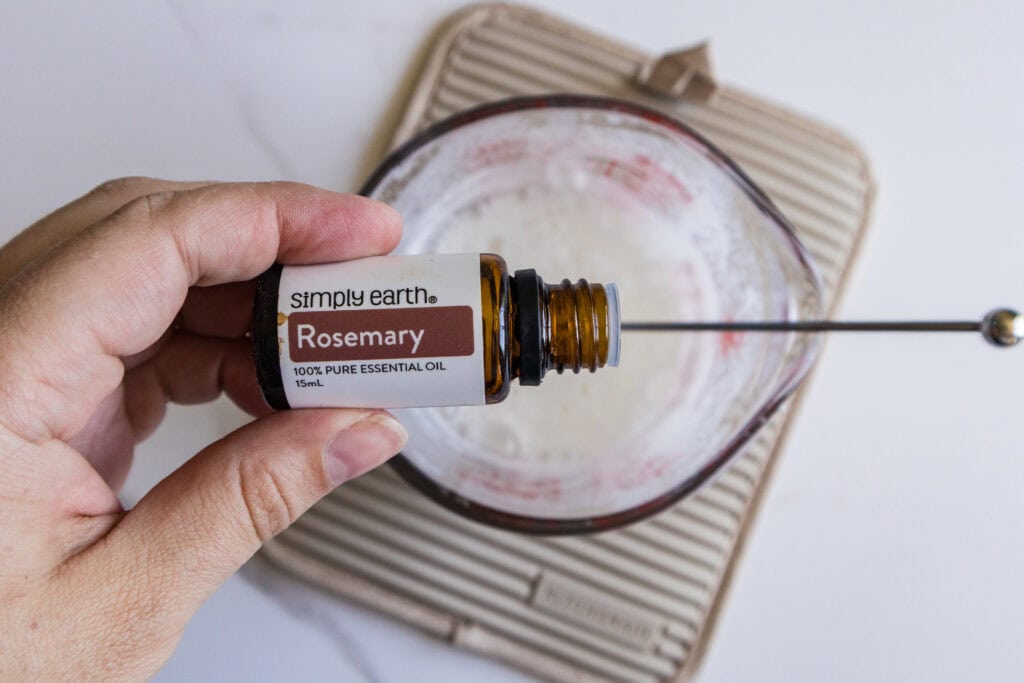
Stir in the preservative and essential oils. Wait 5 minutes.
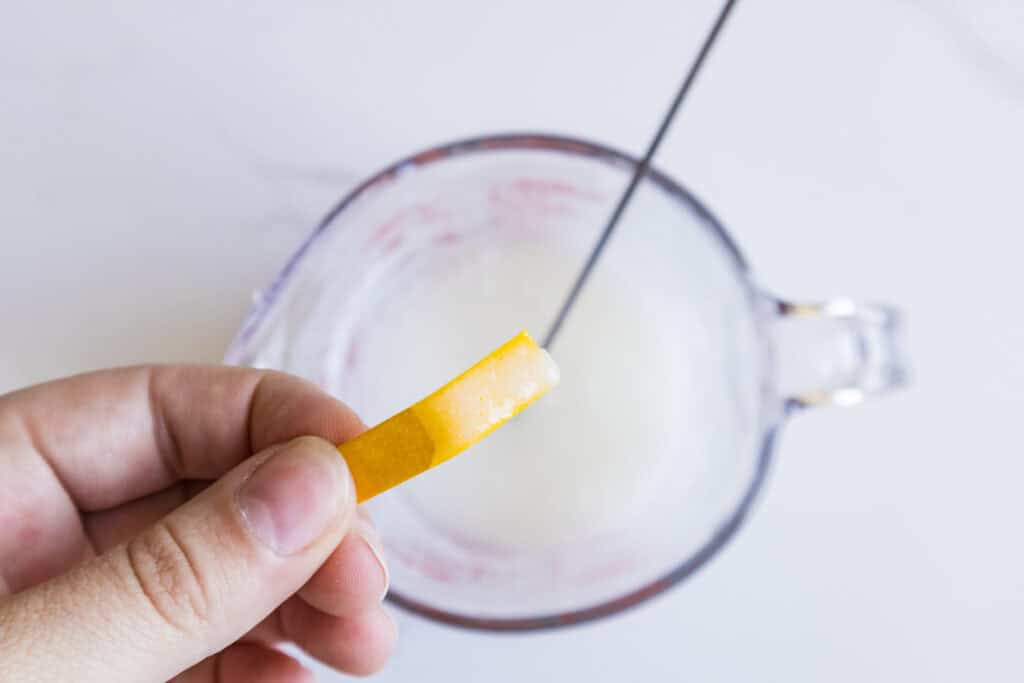
Test and adjust the pH to around 4.5-5.5 using a diluted citric acid solution if needed.
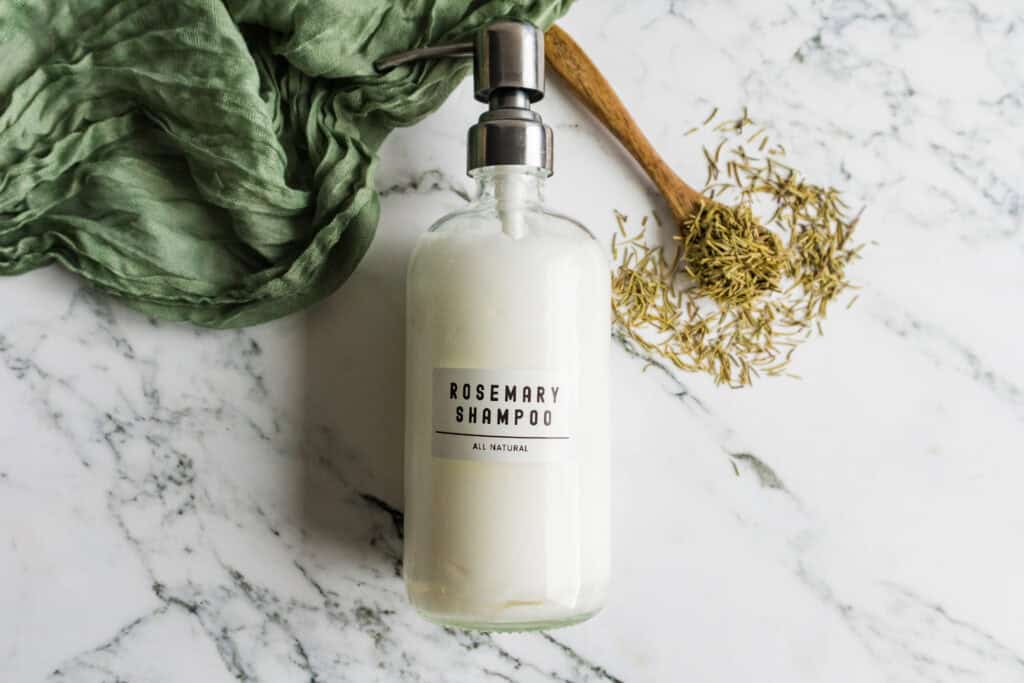
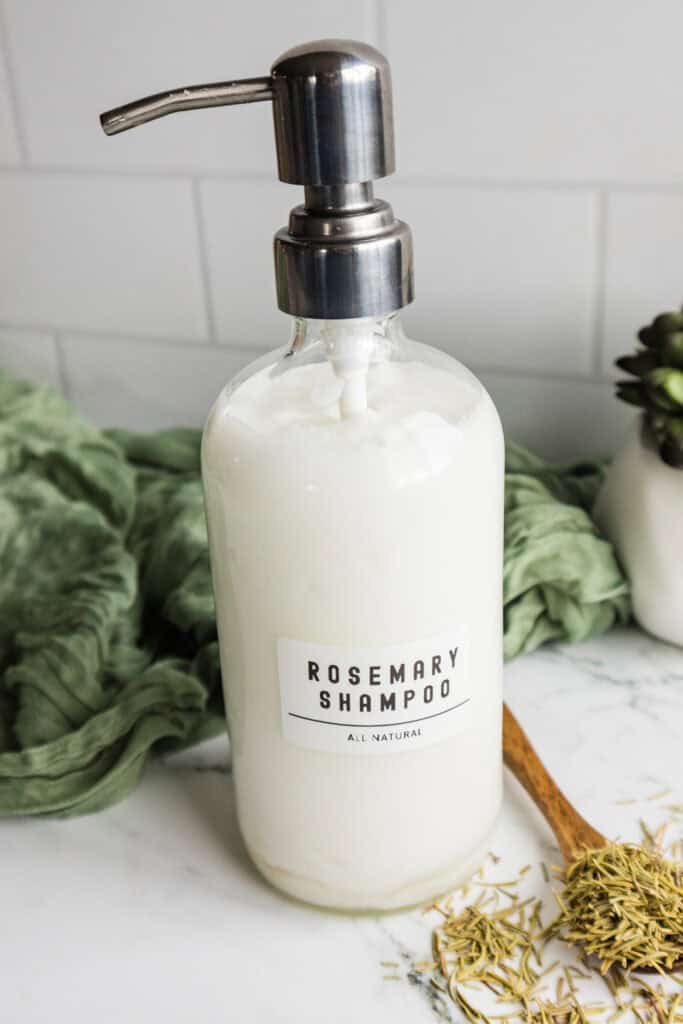
Pour into bottles and allow the shampoo to fully thicken for 24 hours before use.
Notes
- This formula creates a gentle, conditioning cleanser that works well for dry, damaged, or easily tangled hair.
- Store in a cool, dry place.
- Because this contains water, a preservative is necessary or it will not last.
- To lower the pH, make a simple citric acid solution by mixing 1 teaspoon citric acid with 9 teaspoons distilled water. Add a few drops at a time after the shampoo has cooled, stirring well and re-testing the pH between additions until the shampoo reaches a pH of about 4.5-5.5. I did this once or twice before it was right.
How to Use It
Use just as you would any shampoo! Work a small amount into wet hair, massage into the scalp, lather, and rinse thoroughly.
A little goes a long way with this one. Trust me, I figured that out the hard way the first time! For a DIY hair growth shampoo homemade approach, consistency is key, use it regularly rather than expecting overnight results.
This recipe is suitable for all hair types, though it’s particularly lovely for dry or damaged hair thanks to the conditioning phase.
If you want a rosemary mint shampoo variation, swap about 10 of the rosemary drops for peppermint essential oil, the scalp-tingling sensation feels pretty cool!
Store in a cool spot and use within the shelf life of your chosen preservative, typically 3-12 months depending on the brand. Avoid use if you are pregnant, nursing, or have a sensitivity to any of the listed ingredients, and always patch test essential oils before full use.
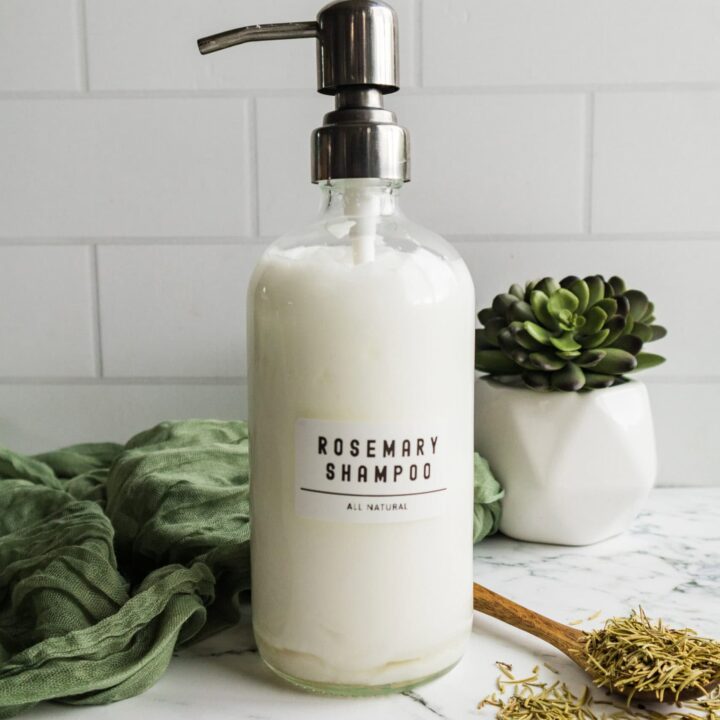
Rosemary shampoo
A gentle, conditioning homemade rosemary shampoo designed for dry, damaged, or tangled hair. Made with mild surfactants, nourishing conditioning ingredients, and rosemary essential oil for a soft, balanced cleanse.
Materials
- Water Phase
- 1/2 cup distilled water
- 1 tablespoon + 1 teaspoon vegetable glycerin
- 3/4 teaspoon panthenol
- 1/4 teaspoon xanthan gum
- Surfactant Phase
- 2 tablespoons + 1 teaspoon decyl glucoside
- 1 tablespoon + 2 teaspoons cocamidopropyl betaine
- 2 teaspoons coco glucoside
- Conditioning Phase
- 1 tablespoon BTMS-50
- 2 teaspoons cetyl alcohol
- Cool Down Phase
- Preservative of choice (follow directions on yours for correct amount)
- 58 drops rosemary essential oil (about 1/3 teaspoon)
Tools
- Heat-safe containers
- Double boiler
- Immersion blender
- Spoon/stir stick
- Thermometer
- PH strips or pH meter
- Shampoo bottle
Instructions
- In a heat-safe container, combine the vegetable glycerin, and xanthan gum. Once combined, add in the distilled water and panthenol.
- In a separate heat-safe container, combine the BTMS-50 and cetyl alcohol.
- Heat both phases using a double boiler until the conditioning phase is fully melted and both phases are around the same temperature (about 160-170°F).
- Pour the conditioning phase into the water phase and mix well until smooth. You can use short bursts of an immersion blender in this step.
- Gently stir in the decyl glucoside, cocamidopropyl betaine, and coco glucoside, mixing slowly to avoid excess bubbles. Do NOT use the immersion blender here, only a stick and go slowly.
- Allow the mixture to cool below 100°F.
- Stir in the preservative and essential oils. Wait 5 minutes.
- Test and adjust the pH to around 4.5-5.5 using a diluted citric acid solution if needed.
- Pour into bottles and allow the shampoo to fully thicken for 24 hours before use.
Notes
- This formula creates a gentle, conditioning cleanser that works well for dry, damaged, or easily tangled hair.
- Store in a cool, dry place.
- Because this contains water, a preservative is necessary or it will not last.
- To lower the pH, make a simple citric acid solution by mixing 1 teaspoon citric acid with 9 teaspoons distilled water. Add a few drops at a time after the shampoo has cooled, stirring well and re-testing the pH between additions until the shampoo reaches a pH of about 4.5-5.5. I did this once or twice before it was right.
Final Thoughts
This is by far my FAVORITE DIY shampoo recipe I’ve ever made, and I’ve tried a lot of them over the years. The first morning I used it I remember thinking, this actually feels like something from a boutique!
I’ve been using it consistently for months now and my hair genuinely feels stronger and less prone to breakage. Next time I make a batch, I want to try infusing the distilled water with a strong rosemary tea first, just to layer in even more of those traditional herbal benefits!
If you’re looking for a thoughtful handmade gift, this rosemary shampoo recipe poured into a pretty amber bottle with a little handwritten label would feel so amazing to receive.
I’ve given it to two friends who immediately asked for the recipe. There is something really special about handing someone a bottle of something you made yourself, knowing exactly what’s in it. That’s what natural living is all about for me 🙂
More Hair Care Recipes:


Create your own natural face and hair care products with simple, effective DIY recipes for healthy, radiant beauty. Get your copy HERE!


