Plantain Salve Recipe for Bug Bites, Cuts & Itchy Skin

Learn how to make your own DIY plantain salve recipe at home! This homemade herbal salve is a staple in my first aid kit, and it comes together with just three simple ingredients.
Plantain (the weed, not the fruit) is one of the most versatile herbs you can work with, and there’s a good chance it’s already growing in your yard! It was in the ones I checked 🙂
I remember spotting broadleaf plantain on hikes during my girl camp years as a teenager. It grows almost everywhere, which makes it one of the easiest herbs for beginners to start foraging and working with!
While fresh plantain leaves are ideal, dried plantain leaves work well too if you don’t have access to the fresh stuff. Either way, you’ll end up with a plantain infused oil and balm that’s ready whenever your skin needs it.
In this guide, you’ll learn how to make plantain salve step by step, plus the plantain salve benefits that make it worth keeping on hand.
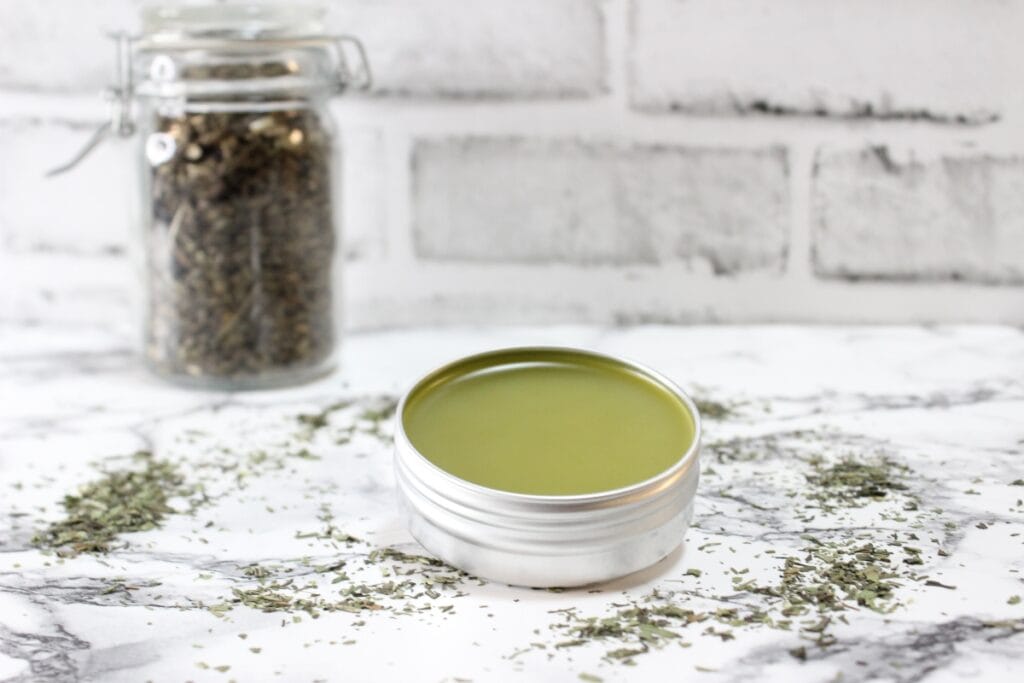
What Is Plantain Salve Used For?
Plantain salve is a go-to natural remedy for irritated, broken, or itchy skin. It’s most loved as a fast fix for bug bites and bee stings, plantain’s astringent compounds help calm the itch and pull out irritation, which is why it’s often called a “drawing salve.”
Herbalists also reach for it on minor cuts, scrapes, and scratches, where its antimicrobial and skin-healing properties support faster recovery.
Because it’s gentle and anti-inflammatory, plantain salve also soothes poison ivy, eczema flare-ups, and dry, cracked skin. Keep a tin in your bag, car, and first-aid kit for whenever skin needs quick, natural relief!
Note: Plantain salve is a supportive home remedy, not a substitute for medical care. See a doctor for anything beyond minor skin irritation.
Learn more about plantain with my Plantain Herbal Guide!
Plantain Salve Benefits
Here’s why this simple plantain herbal salve earns a permanent spot in my first aid kit:
Supports Skin Healing Plantain contains allantoin, a compound known for supporting skin cell turnover. When applied as a salve, plantain may help support the healing of cuts, scrapes, and minor wounds, which is exactly why it’s such a great addition to a natural first aid kit!
Soothes Irritated Skin Plantain salve is a favorite for calming irritated skin, including eczema, dermatitis, and general redness or itchiness. Many people find it helps take the edge off inflammation, swelling, and itching from everyday skin irritations.
Traditionally Used for Minor Skin Issues Plantain has a long history of traditional use on minor cuts and insect bites, where it’s believed to help create a protective barrier on the skin while it heals. We use it as an owie salve for my kids!
Comforting for Burns and Sunburns Plantain salve’s cooling, soothing texture makes it a nice option to reach for on minor burns, including sunburn. Applying it to the affected area can offer some comfort while your skin recovers.
Pin This Post For Later:

Some of these links are affiliate links meaning if you purchase from these links, I will earn a commission at no extra cost to you. Everything I share is my own opinions and things I personally use and love. You can learn more by reviewing my disclosure. As an Amazon affiliate, I earn from qualifying purchases.
Easy Plantain Salve Recipe
Now that you know why this herb is so worth using, here’s how to make plantain salve at home.
Prep time: 10 minutes (plus 6 weeks infusing time, or a few hours if heat-infusing)
Yield: About three 2 oz tins
Ingredients
- Dried plantain leaves
- 1 cup jojoba oil
- 2-3 tablespoons beeswax pellets
- 2 oz tins

Instructions
Fill a glass jar half way full with the dried plantain leaves.
Pour the avocado oil to fill the jar completely. Make sure all the leaves are fully covered.

Put lid on jar and keep in a dark cold area for 6 weeks. Or, you can also slowly heat it on the stove or in a crock pot on low heat setting for a few hours. Then strain out the leaves for your plantain infused oil with a mesh strainer or cheesecloth.
You can compost the plant material.
Add the beeswax to your infused oil. Heat on medium low in a double boiler (small saucepan with hot water on the oven) or for 30 second intervals in the microwave, stirring thoroughly in between until you melt beeswax completely.

Pour into your tins. Leave the hot salve tins uncovered and let sit for a few hours or overnight.

Notes
- This recipe yields about three 2 oz tins of finished salve.
- Store in a cool, dry place for up to six months. Keep out of direct sunlight.
- Want an extra boost? A few drops of a skin-soothing essential oil can be added once the mixture has cooled slightly. We usually do lavender!
- Vitamin E oil can be stirred in at the end to help extend shelf life.
- Any carrier oil works here. Jojoba oil is my go-to, but olive oil or sweet almond oil are great substitutes.

Plantain Salve Uses
To use, apply a small amount to the affected area and gently massage it in. Reapply as needed. As with any new skincare product, patch test on a small area of skin first to check for a reaction.
Here are some ways we use these plantain oil salves in our home:
- Skin Healing: Plantain salve is often used to promote the healing of small cuts, scrapes, and burns. It is great for sensitive skin!
- Insect Bites and Stings: Applying plantain salve to insect bites and stings can help relieve itching, swelling, and pain. It can also help draw out toxins from insect venom in some cases.
- Eczema and Psoriasis: Plantain salve may provide relief for symptoms of eczema and psoriasis.
- Minor Skin Irritations: Plantain salve can be used to soothe minor skin irritations such as rashes, sunburns, and allergic reactions.
- Chapped Lips and Dry Skin: The moisturizing properties of plantain salve make it effective for treating chapped lips and dry skin. It helps hydrate the skin and lock in moisture.
- Diaper Rash: Plantain salve can be used as a natural remedy for diaper rash in infants. Its gentle, soothing properties help calm irritated skin and promote healing.
If you need help with bruising, try a homemade arnica salve!
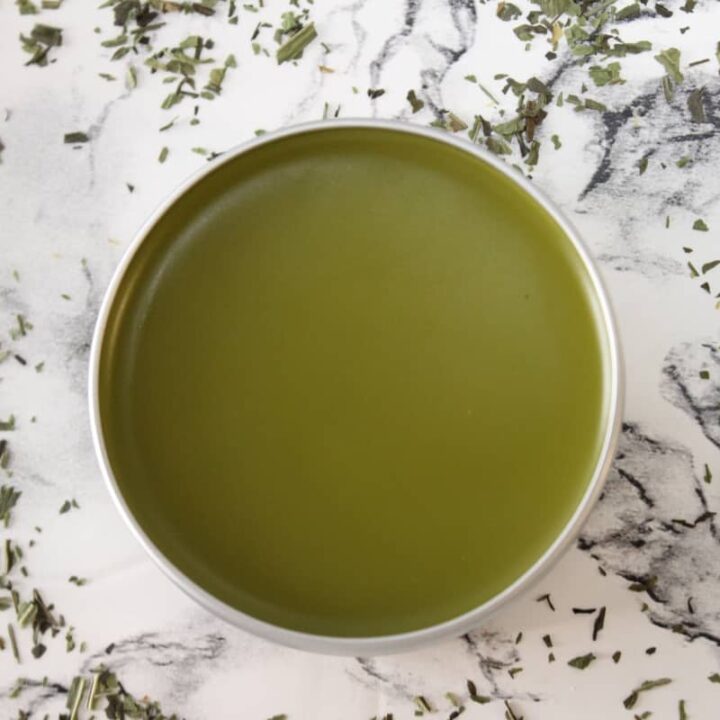
Plantain Salve
Materials
- Dried plantain leaves
- 1 cup avocado oil
- 2 tablespoons beeswax pellets
- 2 oz tins
Instructions
- Fill a glass jar half way full with the dried plantain leaves.
- Pour the avocado oil to fill the jar completely. Make sure all the leaves are fully covered.
- Put lid on jar and keep in a dark cold area for 6 weeks. Or, you can also slowly heat it on the stove or in a crock pot on low heat setting for a few hours. Then strain out the leaves for your plantain infused oil.
- Add the beeswax to your infused oil. Heat on medium low in a double boiler or for 30 second intervals in the microwave, stirring thoroughly in between until fully melted.
- Pour into your tins. Leave uncovered and let sit for a few hours or overnight.
Notes
- This recipe yields about three 2 oz tins of finished salve.
- Store in a cool, dry place for up to six months. Keep out of direct sunlight.
- Want an extra boost? A few drops of a skin-soothing essential oil can be added once the mixture has cooled slightly. We usually do lavender!
- Vitamin E oil can be stirred in at the end to help extend shelf life.
- Any carrier oil works here. Jojoba oil is my go-to, but olive oil or sweet almond oil are great substitutes.
Final Thoughts
A homemade plantain salve is one of the easiest herbal remedies to make, and it’s one you’ll reach for again and again. Once you’ve made a batch, it earns a permanent spot in your first aid kit.
Try this herbal healing salve recipe and see why it’s such a beloved staple in natural skincare!
Check out these other great herbal salves you will love to make too!
From dry skin to sore muscles, 22 Herbal Salves Recipes teaches you how to make natural remedies at home!


Do I follow the recipe the same if I am using fresh plantain leaves? Thank you
Great question! Because fresh leaves do have water, it is best to dry them out before infusing them. I would leave them out for a day on a towel to help get out some of the water. Then, I would cut it up into smaller pieces for the medicinal properties to extract better. Place in a jar and cover with your carrier oil. Then, heat in a double boiler on low for a few hours to infuse it. This helps evaporate some of the remaining water while infusing. Then follow the rest of the recipe. Hope this helps!