All-Natural DIY Bug Spray with Essential Oils

Tired of getting eaten alive every time you go outside? This DIY bug spray with essential oils is a natural, non-toxic solution that actually works, without the harsh chemicals.
We live in mosquito country, and trust me, they find me first. Growing up, I would come home from camp covered in bites.
Commercial sprays made me feel sticky and overwhelmed by the smell. That’s why I started making my own, and I haven’t looked back since.
In this post, I’ll walk you through the benefits of using a natural bug repellent, the best essential oils to use, and give you an easy recipe to keep the bugs away all season long.

Why Choose a DIY Bug Spray?
There are so many reasons to skip the store-bought stuff:
Healthier for Your Skin
- Most commercial bug sprays contain DEET, which can irritate the skin.
- Essential oils are gentler and just as effective when used properly. This recipe was made by an aromatherapist and is safe for use!
Better for the Environment
- Homemade sprays use natural, biodegradable ingredients.
- You reduce your exposure to toxins and protect the ecosystem around you at the same time. Win-win!
Saves Money
- If you already use essential oils, this spray costs very little to make. You might even have what you need already at home! If not, you can make this for years to come when you grab some essential oils!
- No need to constantly buy new bottles of commercial spray.
Customizable
- You can tweak the scent, ingredients, and strength. Find what works best for YOU and use that!
- I love tailoring it to each season or destination.
Pin This Post For Later:

Some of these links are affiliate links meaning if you purchase from these links, I will earn a commission at no extra cost to you. Everything I share is my own opinions and things I personally use and love. You can learn more by reviewing my disclosure. As an Amazon affiliate, I earn from qualifying purchases.
My Go-To DIY Bug Spray Recipe
Here is a super simple bug spray recipe with essential oils to follow:
Ingredients for a 2 ounce bottle:
- 10 drops Lemongrass Essential Oil
- 8 drops Tea Tree Essential Oil
- 6 drops Citronella Essential Oil
- 4 drops Bug Fighter Essential Oil
- 2 oz distilled water
- 1 tablespoon Perfumer’s Alcohol
Use this link to get all the ingredients for this and the spray bottle from Simply Earth and use code KATE10 to get 10% off!

Instructions
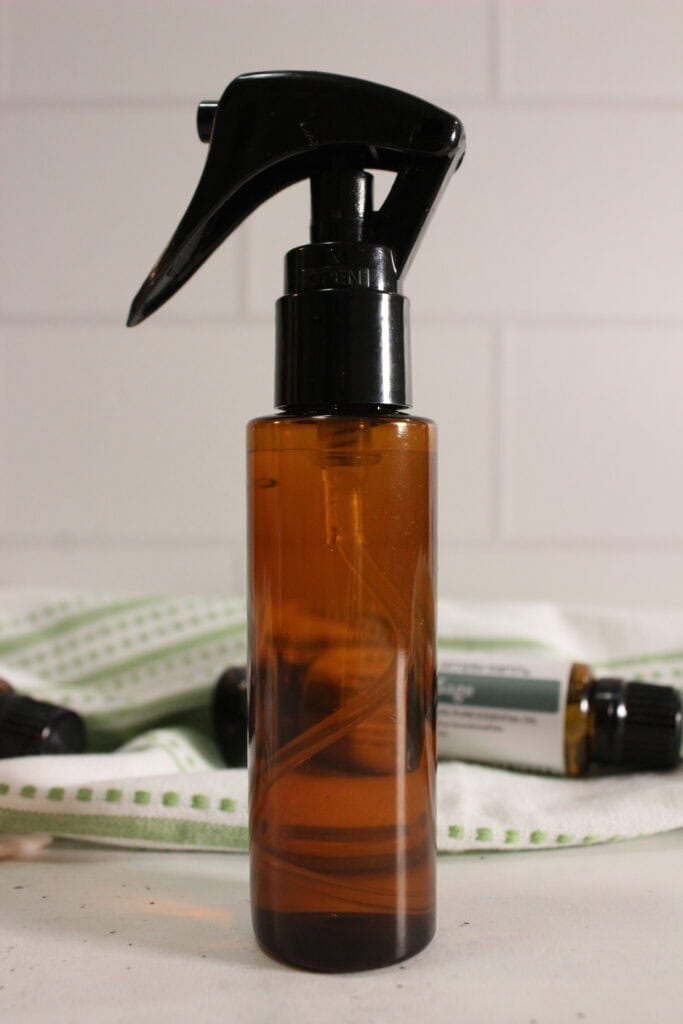
In a 2 oz spray bottle, combine the essential oils and perfumer’s alcohol.

Fill the rest of the bottle with distilled water.
Shake well before each use.

Spray on clothes, exposed skin, or around doors and windows.
Want more herbal recipes just for summer? Get my Herbal Summer First Aid Kit!
Tips for Using Your DIY Bug Spray
- Spray the bug repellent generously on exposed skin and clothing. Avoid spraying directly on your face; instead, spray on your hands and then apply to your face, avoiding the eyes and mouth.
- Reapply the spray every couple of hours or after swimming or sweating heavily. Natural repellents may not last as long as chemical ones, so frequent application is necessary.
- Always perform a patch test before using a new DIY spray to ensure you don’t have an allergic reaction. Apply a small amount to your inner wrist and wait 24 hours to see if any irritation occurs.
- For added protection, wear long sleeves and pants, and use citronella candles (check out this DIY recipe for one!) or essential oil diffusers in outdoor areas. Combining these methods with your DIY bug spray will provide comprehensive protection against bugs.

DIY Bug Spray
Materials
- 10 drops Lemongrass Essential Oil
- 8 drops Tea Tree Essential Oil
- 6 drops Citronella Essential Oil
- 4 drops Bug Fighter Essential Oil
- 2 oz distilled water
- 1 Tbsp Simply Earth Perfumer's Alcohol
Instructions
- In a 2 oz spray bottle, combine essential oils and Perfumer's Alcohol.
- Top off with distilled water.
- Shake well before each use.
- Spray on clothes, exposed skin, or around doors and windows to help keep bugs away.
Notes
- Spray the bug repellent generously on exposed skin and clothing. Avoid spraying directly on your face; instead, spray on your hands and then apply to your face, avoiding the eyes and mouth.
- Reapply the spray every couple of hours or after swimming or sweating heavily. Natural repellents may not last as long as chemical ones, so frequent application is necessary.
- Always perform a patch test before using a new DIY spray to ensure you don’t have an allergic reaction. Apply a small amount to your inner wrist and wait 24 hours to see if any irritation occurs.
- For added protection, wear long sleeves and pants, and use citronella candles (check out this DIY recipe for one!) or essential oil diffusers in outdoor areas. Combining these methods with your DIY bug spray will provide comprehensive protection against bugs.
Best Essential Oils for Repelling Insects
Here are the top essential oils to include in your DIY bug spray:
- Citronella – Repels mosquitoes, flies, and ants
- Lemongrass – Effective against mosquitoes, antibacterial and antifungal
- Tea Tree – Repels mosquitoes and soothes bites with antimicrobial benefits
- Lavender – Repels moths, flies, and mosquitoes; calms skin
- Peppermint – Repels spiders, ants, and mosquitoes; cooling effect
- Eucalyptus – Repels mosquitoes and has a refreshing scent
- Thyme – Strong repellent and antimicrobial
- Patchouli – Repels bugs and offers anti-inflammatory skin support
- Geranium – Repels mosquitoes and supports skin health
Final Thoughts
Making your own DIY bug spray with essential oils is an easy, effective, and eco-friendly way to keep mosquitoes and other bugs away.
Try one of these recipes and enjoy the outdoors, without all the itching. Let me know your favorite blends!
For a portable option you can toss in a bag, try my DIY bug repellent wipes, perfect for on-the-go reapplication without the mess of a spray bottle.
More Recipes For Summertime
- Herbal Summer First Aid Kit
- Natural Sunscreen Recipe
- DIY Bug Spray
- DIY Bug Repellant Balm
- DIY Bug Bite Itch Relief Balm
- Burn Relief Salve
- After Sun Spray
- DIY Citronella Candle
- DIY Sunscreen Spray
- DIY Tanning Oil
- DIY Swim Spray
Want more herbal recipes just for summer? Get my Herbal Summer First Aid Kit!


